
Making workwear more sustainable through responsible sourcing
Steel production is carbon intensive, particularly for permanent works such as sheet piling. As part of the New Emergency Area Retrofit (NEAR) programme, steel sheet piling was required to stabilise land ahead of construction across multiple emergency refuge bays.
Traditionally, permanent works require newly manufactured steel piles, which carry high embodied carbon due to the steel production process.
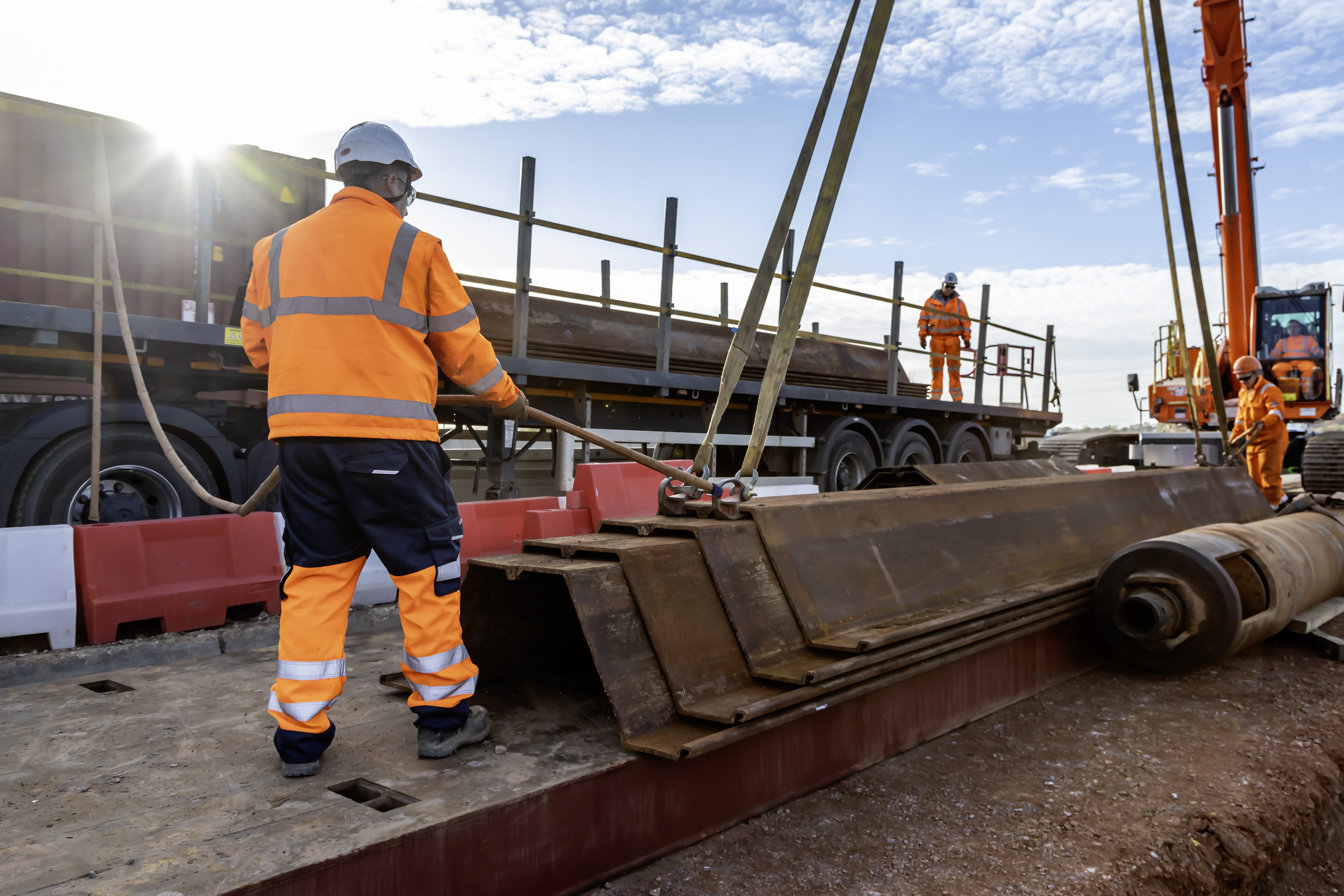
During project development, we identified an opportunity to reuse surplus steel sheet piles from the Thames Tideway project. This required collaboration across the SMP Alliance and detailed testing to confirm the reused piles met safety, durability and performance requirements for permanent works.
By enabling reuse, the project avoided the manufacture of 62.8 tonnes of new steel and delivered an embodied carbon saving of 173.328 tonnes of carbon dioxide equivalent on M4 Bay 10. Further reuse across the M3, M4 and M25 North schemes generated an additional 454 tonnes of carbon dioxide equivalent savings.
Alongside carbon reduction, the approach reduced costs and transport impacts, demonstrating how challenging standard specifications can unlock significant environmental and efficiency benefits while maintaining performance.
62.8
tonnes of new steel manufacture avoided
173
tonne reduction in embodied carbon on M4 Bay 10
454
tonnes of additional carbon dioxide equivalent savings across the M3, M4 and M25 North